


Scopus and Web of Science are among the most influential scientometrics databases, indexing thousands of scientific journals across various disciplines. In scientometrics, there are a significant number of indicators that are calculated for authors, universities, institutions, and scientific journals. Today, we will look at the main metrics of journals in Scopus and Web of Science, as well as their main features.

Journal metrics in Scopus database
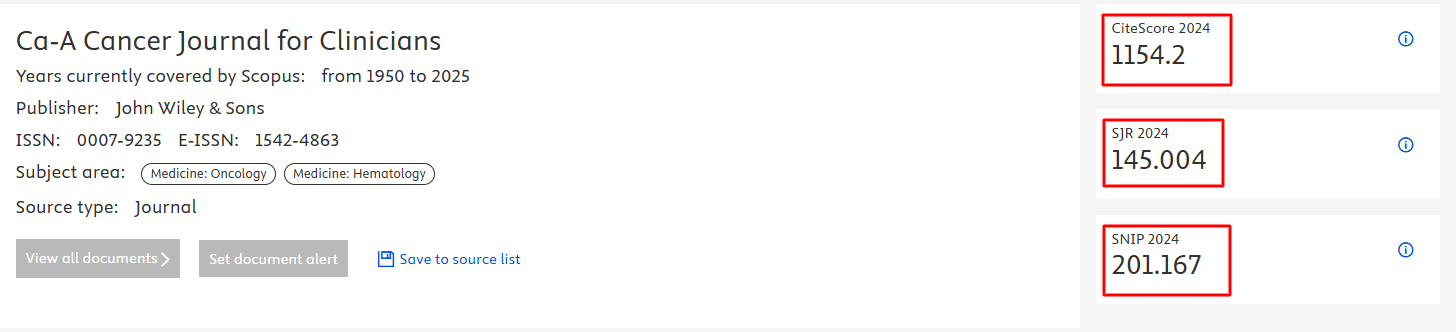
The main metrics for journals in the Scopus database include Source Normalised Impact per Paper (SNIP), SCIMago Journal Rank (SJR) and CiteScore.
- SNIP is an indicator used to assess the impact of a publication. This metric can be used to compare journals on different topics according to the frequency with which authors cite other sources. To calculate it, the number of citations is compared to the number of citations over the last 3 years. This value is then divided by the normalised citation index for the relevant scientific field, which allows for the specifics of the discipline to be taken into account.
- SJR is an indicator of the impact of scientific journals, calculated with the support of the SCIMago laboratory. This indicator allows us to understand not only how often articles from this publication are cited, but also the influence of these citations. SJR gives greater weight to citations that come from authoritative and highly rated journals.
- CiteScore is a metric developed by Elsevier specialists. This indicator is calculated as the ratio of the average number of citations to the number of journals over the last 4 years. It is worth noting that CiteScore is calculated for 5 types of peer-reviewed documents: research articles, review articles, conference proceedings, book chapters, also published in the journal over the last 4 years.
All of these metrics can be viewed on the journal's page in the Scopus database.
Metrics of journals in Web of Science database
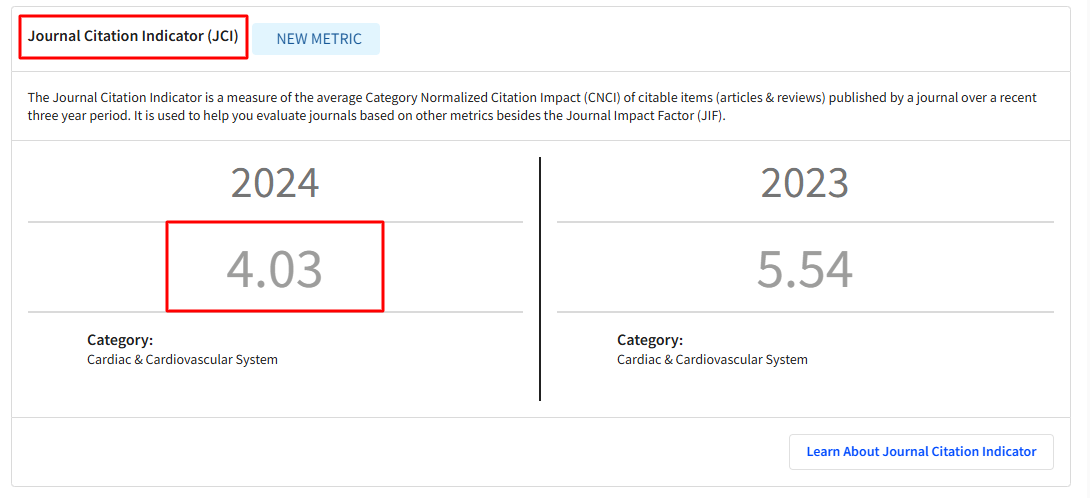
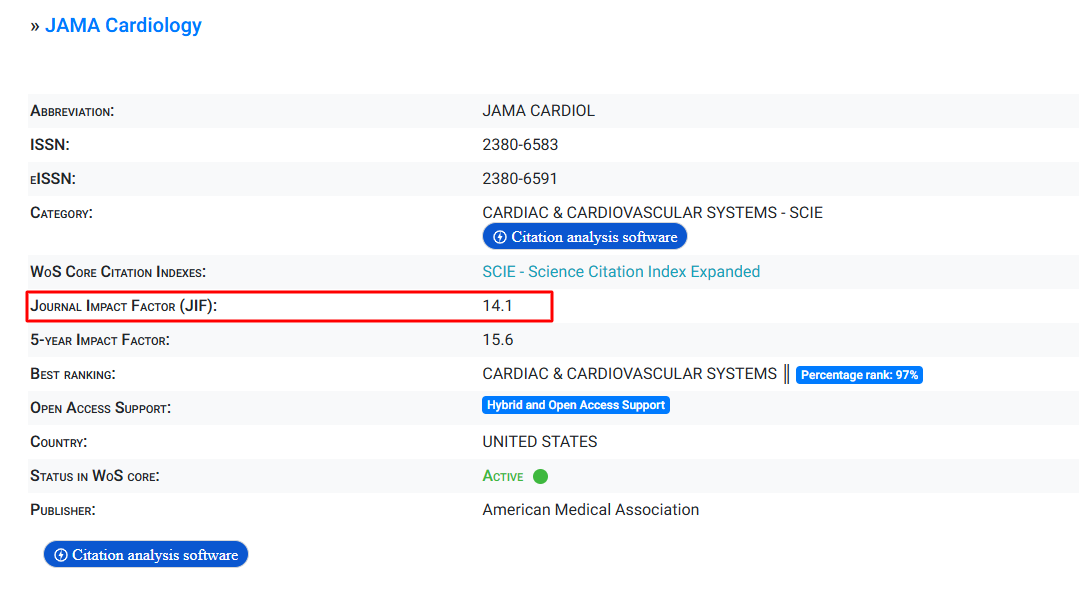
Web of Science (WoS) has a slightly different approach to calculating journal impact indicators. The main metrics for journals in this database are the Journal Impact Factor (JIF) and the Journal Citation Indicator (JCI). We will examine these indicators in more detail below.
- The Journal Impact Factor is one of the best-known indicators for assessing the impact of a publication. This metric reflects the average number of citations of articles published in the journal, usually over the last two years. JIF is calculated based on the Science Citation Index Expanded (SCIE) and Social Sciences Citation Index (SSCI) and only for journals indexed in the WoS database.
- Journal Citation Indicator is a metric introduced by the Web of Science database in 2021. This indicator takes into account the field of science and allows for the classification of even those journals for which the Journal Impact Factor has not yet been calculated. JCI is calculated as the average value of normalised citations of articles in a journal over a three-year period, comparable to the average citation rate of articles of the same type, year of publication and scientific field in the Web of Science database.
The above-mentioned WoS metrics can be found on the publication's profile page in this database.
Quartile and percentile of a scientific journal
It is worth noting that quartiles and percentiles of scientific journals are calculated for both Scopus and WoS journals.
All scientific journals indexed in the above-mentioned databases are divided into four main groups (quartiles) depending on their place in the ranking of the best journals. In the Scopus database, the quartile of a journal is determined based on the SJR indicator, and in Web of Science, based on the JIF. The quartiles of a scientific journal are designated as: Q1, Q2, Q3, and Q4.
A percentile is an indicator that reflects a journal's ranking in its subject area and is expressed as a number from 1 to 99, where 99% is the highest indicator. It reflects the percentage of journals that a particular publication surpasses in its field in terms of a specific indicator, such as citation frequency. Consequently, a journal with a percentile of 99 is among the top 1% of the most influential journals in its subject area in terms of citation index.
In summary, when selecting a publication in the Scopus and Web of Science databases, it is important to pay attention to their scientometrics indicators and be able to navigate them. This directly affects the visibility of your work among the scientific community and your further professional development.
Need help choosing a journal? Contact Scientific Publications! We provide professional advice and a free audit of your scientific article to ensure its successful publication in Scopus or Web of Science ranked journals. Get a free consultation by filling out the form below, and a manager will contact you shortly. Together towards successful publication!


